Blog

  • Effective Steps for Cleaning Mildew in Your Shower

    What is mildew

    What cleaning supplies are best for mildew?

    When it comes to cleaning mildew, there are several cleaning supplies that can be effective in removing it. Some of the best cleaning supplies for mildew include:

    1. Vinegar: White vinegar is a natural cleaning agent that can help to kill and remove mildew. It is safe to use on most surfaces and can be mixed with water in a spray bottle for easy application.
    2. Bleach: Bleach is a strong disinfectant that can be effective in killing mildew. It should be used carefully, however, as it can be harmful to some surfaces and can produce fumes that are toxic if inhaled.
    3. Borax: Borax is a natural cleaning powder that can be mixed with water to create a paste that can be used to scrub mildew from surfaces.
    4. Hydrogen Peroxide: Hydrogen peroxide is a natural disinfectant that can be effective in killing mildew. It should be used carefully, however, as it can bleach some materials.

    When using any cleaning supplies for mildew, it is important to wear gloves and protective clothing and to work in a well-ventilated area.

    Non toxic cleaning supplies for mildew

    There are several environmentally friendly cleaning supplies that can effectively clean mildew while minimizing their impact on the environment. Here are some options:

    1. Vinegar: Vinegar is a natural and effective cleaner that can kill mildew on contact. Mix equal parts of vinegar and water and apply the solution to the affected area using a spray bottle. Let the solution sit for a few minutes, then wipe away the mildew with a clean cloth.
    2. Hydrogen peroxide: Hydrogen peroxide is another natural cleaner that can kill mildew and other fungi. Mix one part hydrogen peroxide with two parts water and apply the solution to the affected area using a spray bottle. Let the solution sit for 10-15 minutes, then wipe away the mildew with a clean cloth.
    3. Baking soda: Baking soda is a natural abrasive that can help to remove mildew stains from surfaces. Mix baking soda with water to form a paste and apply it to the affected area. Let the paste sit for a few minutes, then scrub away the mildew with a brush or sponge.
    4. Tea tree oil: Tea tree oil is a natural antifungal that can help to kill mildew and prevent it from returning. Mix one teaspoon of tea tree oil with one cup of water and apply the solution to the affected area using a spray bottle. Let the solution sit for a few hours, then wipe away the mildew with a clean cloth.

    Using environmentally friendly cleaning supplies is a great way to clean mildew while minimizing the impact on the environment. Always follow the manufacturer’s instructions and take proper safety precautions when using these products.

    How to clean mildew off of leather?

    Mildew can be a common problem on leather items, especially if they have been exposed to moisture or stored in a damp environment. Here are some steps you can take to clean mildew off leather:

    1. First, remove any loose dirt or debris from the leather surface using a soft-bristled brush or cloth.
    2. Mix equal parts water and rubbing alcohol in a bowl. Dip a soft cloth into the solution and wring out excess liquid.
    3. Gently rub the affected area of the leather with the damp cloth, taking care not to saturate the leather.
    4. If the mildew is particularly stubborn, you may need to use a mild detergent. Mix a small amount of mild detergent, such as dish soap, with water in a bowl. Dip a soft cloth into the solution and wring out excess liquid. Gently rub the affected area of the leather with the damp cloth.
    5. Rinse the leather with a clean, damp cloth to remove any remaining cleaning solution.
    6. Use a dry, absorbent cloth to blot the leather and remove any excess moisture.
    7. Allow the leather to air dry completely before conditioning it with a leather conditioner to restore its natural oils and prevent future mildew growth.

    Note: Always test any cleaning solution on a small, inconspicuous area of the leather first to ensure that it does not damage or discolor the leather.

    How to clean mildew off of boat seats?

    Cleaning mildew off boat seats is important not only for the appearance of the seats, but also for the safety of the passengers. Here are some steps to clean mildew off boat seats:

    1. Start by removing any loose dirt and debris from the seat using a soft-bristled brush or vacuum cleaner.
    2. Mix a solution of equal parts water and white vinegar in a spray bottle.
    3. Spray the solution onto the affected areas of the seat and let it sit for a few minutes.
    4. Scrub the seat with a soft-bristled brush, being careful not to damage the upholstery.
    5. Rinse the seat with clean water and use a clean, absorbent cloth to dry it thoroughly.
    6. If the mildew is stubborn and does not come off with the vinegar solution, you can use a commercial mildew cleaner specifically designed for boat seats. Be sure to follow the manufacturer’s instructions carefully and test the cleaner on an inconspicuous area first to ensure that it does not damage the upholstery.

    How to clean mildew in a shower?

    Cleaning mildew in the shower can be a challenging task, but with the right approach, it is possible to remove it effectively. Here are some steps you can follow to clean mildew in your shower:

    1. Wear protective gear: Before you begin cleaning, it’s essential to protect yourself by wearing gloves, a mask, and safety goggles. This will help you avoid any potential health hazards.
    2. Ventilate the area: Open any windows and turn on the fan to help circulate the air and remove moisture from the area.
    3. Mix a cleaning solution: Create a cleaning solution by mixing equal parts water and white vinegar or hydrogen peroxide. Alternatively, you can use a commercial cleaner designed for removing mildew.
    4. Apply the solution: Spray or apply the solution onto the mildewed area and let it sit for 10-15 minutes.
    5. Scrub the area: Use a scrub brush or sponge to scrub the affected area thoroughly. Pay attention to the grout lines, corners, and any other hard-to-reach areas.
    6. Rinse and dry: Rinse the area with water and dry it with a clean towel or rag. Be sure to dry the area completely to prevent mildew from reoccurring.
    7. Prevent future mildew growth: To prevent mildew from growing in your shower in the future, make sure to ventilate the area properly, wipe down surfaces after each use, and use a mildew-resistant shower curtain or liner.

    By following these steps, you can effectively clean mildew in your shower and prevent it from returning.

  • How to Prevent Mildew in Your Home: Tips and Strategies

    Mildew is a type of fungal growth that can appear on a variety of surfaces, such as walls, ceilings, fabrics, and plants. It typically appears as a powdery, white or grayish substance that can spread quickly and cause damage to the affected surface. Mildew thrives in warm and humid environments, and can grow on any organic material that is moist and exposed to air. It can be harmful to human health, causing allergies, respiratory problems, and other health issues. To prevent mildew growth, it is important to maintain dry and well-ventilated indoor environments and to regularly clean and disinfect surfaces that are susceptible to mildew growth.

    What causes mildew?

    Mildew can appear in the house when there is moisture and warmth in the environment. Some of the most common causes of mildew growth in the house include:

    1. Humidity: High humidity levels in the house can create the perfect conditions for mildew growth. This can happen in bathrooms, kitchens, and laundry rooms, where moisture levels are naturally higher.
    2. Water damage: Leaking pipes, roof leaks, or floods can create a damp environment that is conducive to mildew growth.
    3. Poor ventilation: Poor ventilation can trap moisture and prevent it from escaping, which can lead to mildew growth. This can happen in rooms that are not well-ventilated or do not have windows.
    4. Organic material: Mildew can grow on any organic material, such as wood, paper, fabrics, and food. If these materials are damp and exposed to air, mildew can quickly grow and spread.

    To prevent mildew growth in the house, it is important to maintain dry and well-ventilated indoor environments, fix any leaks or water damage promptly, and regularly clean and disinfect surfaces that are susceptible to mildew growth.

    How to clean mildew

    What is the difference between mildew and mold?

    Mildew and mold are both types of fungi that can grow in damp environments. While they are similar in many ways, there are some key differences between mildew and mold:

    1. Appearance: Mildew typically appears as a powdery or downy white or grayish growth, while mold can have a fuzzy or slimy texture and can be black, green, brown, or other colors.
    2. Growth: Mildew usually grows on the surface of organic materials, while mold can grow deeper into porous materials such as drywall or wood.
    3. Health Effects: Both mildew and mold can cause respiratory problems, allergies, and other health issues, but mold is generally considered to be more dangerous than mildew. Some types of mold produce mycotoxins, which can be harmful to humans and pets.
    4. Conditions: Mildew grows best in warm, humid conditions and can be found in places like bathrooms, kitchens, and laundry rooms. Mold can grow in a wider range of temperatures and humidity levels and can be found in basements, attics, and other areas of the house.

    In summary, while mildew and mold share some similarities, they differ in appearance, growth patterns, health effects, and conditions in which they thrive.

    What are visual difference between mold and mildew?

    Mildew and mold are both types of fungi that can grow in damp and humid environments. While they share some similarities, there are some visual differences between the two that can help you distinguish between them.

    Mildew typically appears as a white or gray powdery growth on surfaces, such as walls, ceilings, and fabrics. It often has a fluffy or cottony texture and can spread quickly in humid environments. Mildew can also have a musty or stale odor.

    Mold, on the other hand, can appear in a variety of colors, including black, green, yellow, and brown. It often appears as fuzzy or slimy patches on surfaces and can have a musty or earthy odor. Mold can also grow on a wider range of surfaces than mildew, including wood, paper, and concrete.

    While mildew and mold can look similar in some cases, there are some key differences that can help you distinguish between the two. If you are unsure about whether you are dealing with mildew or mold, it is best to seek professional help to properly identify and address the issue.

    Is mildew dangerous?

    While mildew is generally considered to be less dangerous than mold, it can still have some harmful effects. Here are some potential effects of mildew:

    1. Allergic reactions: Some people may be allergic to mildew, which can cause symptoms such as sneezing, coughing, and itching.
    2. Respiratory problems: Inhaling mildew spores can irritate the lungs and cause respiratory problems such as wheezing and difficulty breathing.
    3. Surface damage: Mildew can damage organic surfaces such as fabrics, paper, and wood, and can cause discoloration and deterioration over time.
    4. Odors: Mildew can produce a musty odor that can be unpleasant and difficult to remove.

    While mildew is generally considered to be less dangerous than mold, it is still important to take steps to prevent its growth and to clean it up promptly if it does appear. This can help to protect your health and prevent damage to your home or belongings.

    Do you get sick from mildew right away?

    The time it takes to get sick from mildew can vary depending on a number of factors, including the individual’s sensitivity to the mildew, the amount of exposure, and the duration of exposure. Some people may develop symptoms immediately after exposure, while others may not experience any symptoms until days or even weeks later.

    Common symptoms of mildew exposure include:

    1. Sneezing, coughing, and other respiratory problems
    2. Headaches
    3. Eye irritation
    4. Skin rash or irritation
    5. Fatigue

    If you suspect that you have been exposed to mildew and are experiencing any of these symptoms, it is important to seek medical attention. Your doctor may be able to diagnose the cause of your symptoms and recommend treatment to help you feel better. Additionally, taking steps to prevent mildew growth and cleaning up mildew promptly if it appears can help to protect your health and prevent future exposure.

    Does exposure to mildew affect pets?

    Mildew can affect the health of pets, especially if they are exposed to it for prolonged periods of time. Pets can develop respiratory problems, allergies, and other health issues if they inhale mildew spores or come into contact with mildew on surfaces.

    In addition, some pets may be more sensitive to mildew than others. For example, pets with pre-existing respiratory or allergy issues may be more susceptible to the harmful effects of mildew.

    If you suspect that your pet has been exposed to mildew or is experiencing health issues related to mildew exposure, it is important to seek veterinary attention. Your veterinarian can evaluate your pet’s symptoms and recommend treatment to help your pet feel better. Additionally, taking steps to prevent mildew growth in your home can help to protect your pet’s health and well-being.

    How to prevent mildew?

    Here are some steps you can take to prevent mildew growth in your home:

    1. Control moisture: Mildew thrives in damp, humid environments, so it is important to control moisture levels in your home. Use a dehumidifier or air conditioner to keep indoor humidity levels below 60%.
    2. Ventilate: Proper ventilation can help to prevent mildew growth. Use exhaust fans in bathrooms and kitchens to remove moisture from the air, and open windows and doors to promote air circulation.
    3. Insulate: Proper insulation can help to prevent condensation and moisture buildup. Make sure that your home is properly insulated to prevent moisture from seeping in.
    4. Clean regularly: Regular cleaning can help to prevent mildew growth. Clean bathrooms and other areas prone to moisture regularly, and use a mildew-resistant cleaner to help prevent mildew growth.
    5. Use mold-resistant materials: Use mold-resistant paint, drywall, and other materials in areas prone to moisture to help prevent mildew growth.
    6. Address leaks and water damage: Fix any leaks or water damage promptly to prevent moisture buildup and prevent mildew growth.

    By taking these steps, you can help to prevent mildew growth and keep your home clean and healthy. If you do notice mildew growth, it is important to clean it up promptly to prevent it from spreading and causing further damage.

  • Tips to Prevent Mold Growth in Your Bathroom

    Tips to Prevent Mold Growth in Your Bathroom

    Dealing with mold in the bathroom is never a fun experience. Mold can eventually appear in your bathroom due to numerous reasons. Trying to eliminate mold in your home requires a lot of hard work and patience. Staying proactive by taking a few steps to limit the chance of mold growth is important in creating a much safer environment for yourself and your family.

    Here are a few of the most common reasons why mold can grow in your bathroom. 

    1) Too Much Moisture

    An excess amount of moisture is one of the main reasons why mold grows in a bathroom. Drying off any wet surfaces in the bathroom only takes a few seconds, and it’s well worth the effort. Turning on your bathroom exhaust fan while you shower and leaving it on for around twenty minutes after opening the bathroom door is essential in removing excess moisture and humidity.

    2) Clogged Drains

    Clogs inside of a drain can also be another reason why you are dealing with a mold problem in your bathroom. Drain clogs can happen in numerous ways, whether it’s due to soap scum, dirt, grease, or even hair. All of this excess water due to the blockage makes it a perfect place for mold to grow. Pouring around a half cup of baking soda and another half cup of vinegar while letting it settle for an hour can sometimes help unclog the drain.

    3) Water Leaks

    Sometimes a water leak can cause mold to grow in your bathroom due to the additional moisture. The safest option is to always reach out to a plumber to check out the leak and make any necessary repairs. Taking care of any water leaks as soon as possible helps you prevent mold growth, and it will even save you quite a bit of money on your water bill each month.

    4) Dirty Clothes or Towels

    Keeping your bathroom clean doesn’t only improve its appearance but can also limit the chance of mold growth. Washing your towels, dirty clothes, and bathroom rugs at least once per week is recommended in keeping your bathroom clean. While doing laundry isn’t always an enjoyable experience, it’s well worth the effort in helping to keep your bathroom much cleaner and free of mold.

    Closing Thoughts

    Mold growth can often happen in a bathroom over time. Understanding how to prevent mold growth can save you a lot of stress while also creating a much healthier environment. Reducing the amount of moisture, keeping your drains clean, repairing water leaks, and removing dirty clothes are just a few examples of the several ways you can help keep your bathroom free of mold.

  • Understanding Mold in Bathrooms: Causes, Signs, and Health Risks

    Understanding Mold in Bathrooms: Causes, Signs, and Health Risks

    Mold in bathroom infestations are a common occurrence in most households. In fact, some reports estimate that around 70% of the houses have mold problems [1]. 

    What is mold?

    First, let’s get to know what mold is briefly. 

    Mold, sometimes called fungi or mildew, is a group of microorganisms that has various forms, shapes, and colors. Their characteristics differ depending on their species and while some of the molds can be quite harmless, some can cause serious health threats. 

    Molds usually grow on organic matter and they need a moisture-rich environment to thrive. They produce tiny particles—known as spores—which when fallen on a surface, can sprout a new fungal colony. These spores are quite hardy and they can survive many harsh conditions. This makes it exceptionally hard to completely get rid of molds.

    You can find molds or their spores everywhere and no space can be 100% free of them [2].

    How many types of molds are there? Should we worry about all of them?

    There are more than 100,000 species and types of molds but only a few can be found in household environments. The most common types of mold you will find in indoor settings are Cladosporium, Penicillium, and Aspergillus [3]. Some other fungal species like Alternaria, basidiospores, Chaetomium, Periconia, and Stachybotrys chartarum have also been reported in certain buildings [4] [5].

    Most of these fungi do not cause diseases. However, species like Stachybotrys chartarum can cause serious respiratory tract symptoms as well as conditions associated with the central nervous system [4]. 

    We will discuss the health consequences of mold contamination later in this article.

    How do I know if there’s mold in my bathroom?

    mold in bathroom
    Mold in bathroom

    There are several signs of fungal growth in a bathroom. Some indications can be quite obvious while others can be easy to miss until they spread out of hand—which mold does surprisingly quickly.

    The first thing you sense if there’s mold in your bathroom is most likely a moldy smell. This is the odor of the mold decomposing its surfaces and it can smell earthy or musty. 

    If you notice your bathroom has this smell, but can’t see mold in visible places, it probably means there’s some hidden growth of fungi in there.

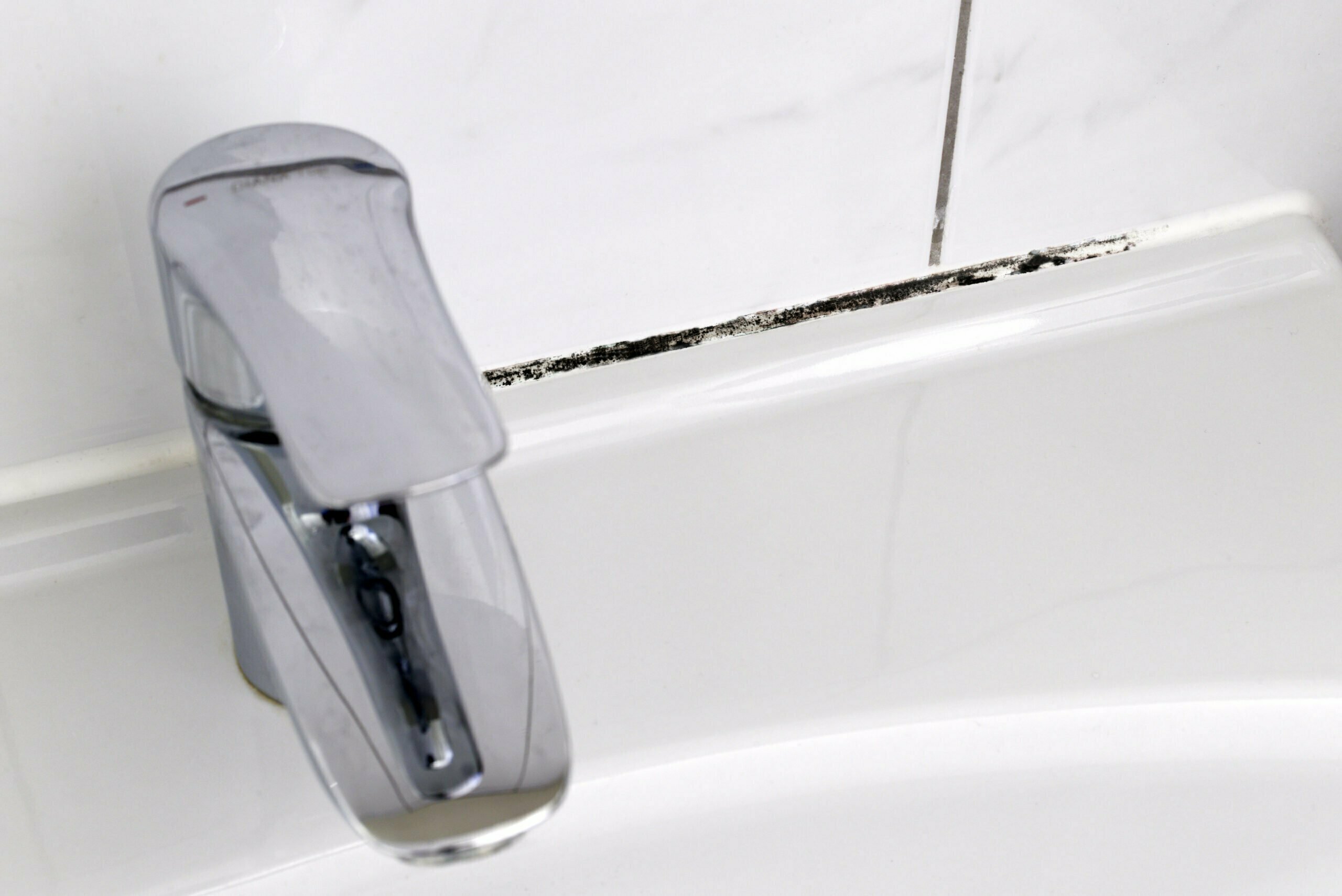
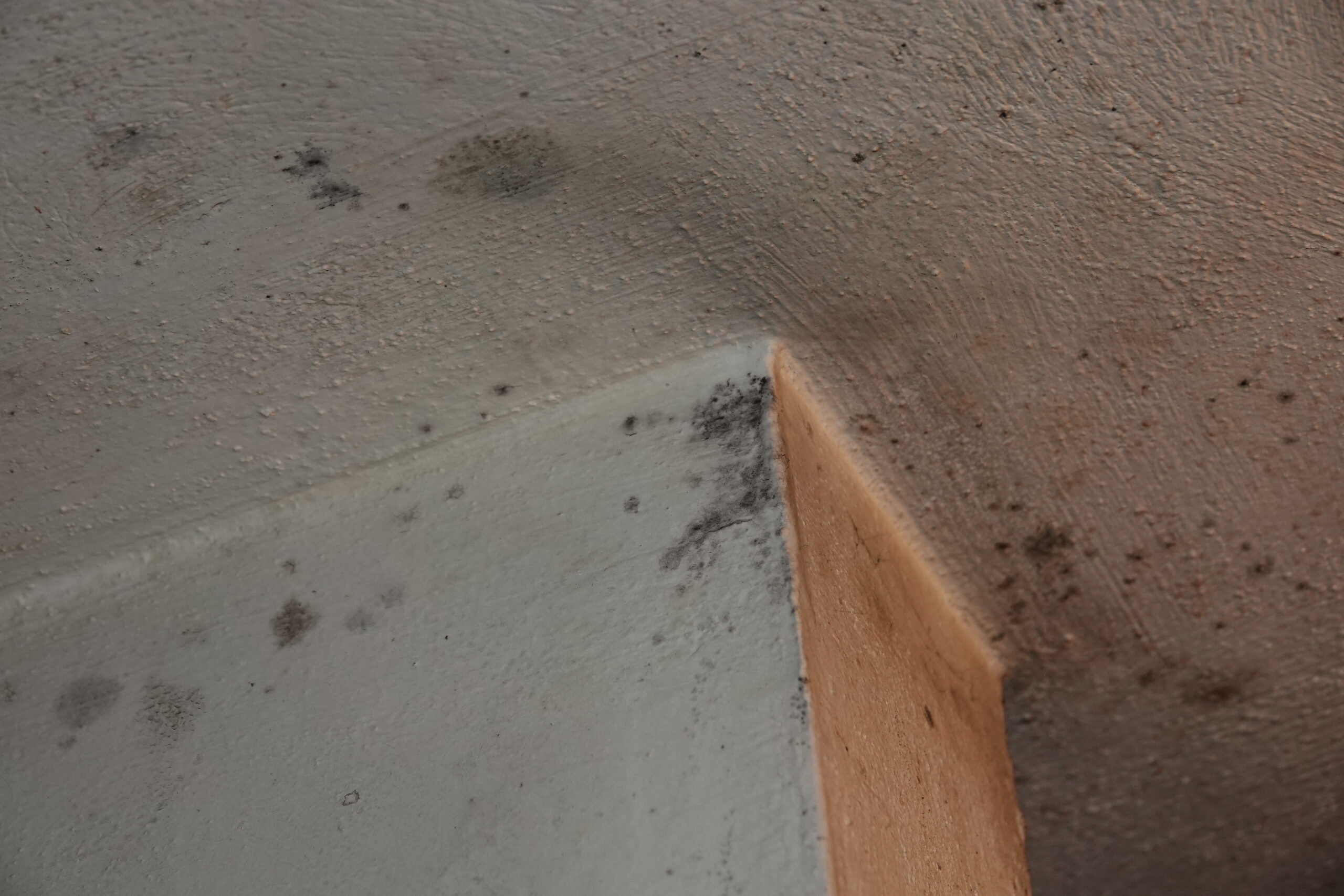
    The more noticeable signs of mold growth are dark spots. These spots may appear on the tiles, tile grout, waterproof sealant around your bathtub or sink, or even on the bathroom ceiling. You will see tiny blackish-grey or brownish dots at first and they can increase in size if left uncleaned. They can look fuzzy or slimy depending on the fungal species. 

    More serious mold problems can cause the bathroom tiles to come loose or the wall plaster to disintegrate. You may even notice swellings in the paint. These signs can indicate mold growth underneath the tiles or inside the drywall.

    Why does mold grow in the bathroom?

    Moisture damage is the main culprit of mold attacks. Bathrooms are especially prone to mold growth as they are constantly exposed to water. If you detect fungal infestations in your bathroom, most likely you have water spills, leaks, or other structural issues that lead to water overflow [6]. 

    Molds love dark, damp environments with poor air circulation. Even the cleanest and driest bathrooms can have a few spots that fit this description. Under the sink, behind the water closet, and around the shower area are the most common places that are ideal for fungal growth.

    Cellulose products such as paper, cardboard, and wood provide perfect nutrition sources for mold when they get wet [3]. However, molds can also grow in particularly nutrient-poor substrates such as dry wall plaster, paint, and insulation materials.

    Wet towels, damp toilet paper, and uncleaned bath toys can also be the best breeding grounds for fungi. 

    Poor ventilation is another reason that causes a high moisture content in the air which leads to a humid environment in your bathroom. This can also act as a contributing factor for mold growth on walls, flooring, and roofs. 

    Can mold be a health concern? 

    Molds—especially their spores and metabolites—can lead to various health-related issues in some people while some may not be affected [3]. Molds produce allergenic substances, irritants, and sometimes, toxins [7]. If you’re allergic or sensitive to these stuff, you can get sick if you touch or inhale them. 

    Most of the symptoms are related to the upper respiratory tract such as coughing, sneezing, wheezing, or a stuffed nose. They can produce long-lasting flu and cold-like symptoms that don’t go away.

    In people with allergies, fungi or fungal spores may trigger more serious conditions such as asthma or hypersensitivity pneumonitis [8]. They can also cause respiratory infections such as bronchitis [8]. 

    Other symptoms that arise due to molds include headache, eye irritation, nosebleeds, and even gastrointestinal problems [9]. 

    Apart from respiratory tract irritations, toxin-producing molds like Stachybotrys chartarum can cause symptoms related to the central nervous system. These symptoms can include headache, lightheadedness, sleep problems, and difficulty concentrating [4]. Although seemingly unrelated, they can also make you easily irritated and make you mentally fatigued [4]. 

    Most of these indoor fungi don’t cause infections in humans as they prefer cooler temperatures than the body temperature. However, some species can result in infections in the skin, nails, and toes [5].   

    What other problems can these molds cause?

    In addition to these health problems, fungi contamination can bring about various other complications. The dark spots and musty odor can noticeably lower the aesthetics of your bathroom, making the environment unpleasant. 

    But that’s the least of your problems if you consider more critical structural issues mold can cause if uncontrolled. Molds get inside and literally eat up organic materials in order to absorb nutrients from them. This means any surface they grow on will disintegrate and fall apart. 

    It can happen to your walls, roofing, flooring, and insulations. In extreme situations, this can even result in walls falling down, ceilings collapsing, and floorboards crumbling. Even floor tiles can crack and come loose if the floorboards underneath are decaying. Grout and sealing may fracture, leaking water inside and making the situation worse. 

    Is there a way I can prevent mold growth?

    First and foremost, you should avoid moisture build-up in your bathroom. As molds thrive in highly humid conditions, keeping your bathroom dry is the first step to preventing mold growth.

    Check regularly for leaks under the sink as they are easy to miss and they provide ideal spots for fungal infestations. Leaks can also happen in your shower, around the toilet, and inside your walls. Make note of any dampness in your walls or on your floor as they can be a sign of leaking pipes. If you’re living in a multiple-story building, you can even have leaks on your ceiling. 

    Make sure there’s enough ventilation in your bathroom. Open windows to let air move around. If there aren’t any windows, be sure to turn on your exhaust fan regularly—especially after a shower. Non-moving, damp air can settle on surfaces and make the environment favorable for mold growth. 

    The best is to let your bathroom get a lot of sunlight but it can be a difficult (or even an impossible) task if you’re living in an apartment building. In such a situation, know that there’s a potential risk of mold infestation and take extra precautions to keep your bathroom moisture-free.

    You can place a dehumidifier or an air conditioner to draw water vapor away from your bathroom. The guidelines state that you should keep the relative humidity levels between 30% and 50% throughout the day [3]. Make sure you check the moisture levels several times during the day to do needed adjustments.

    It’s best not to have carpets in your bathroom as they can easily get wet and retain wetness. Remove wet towels, wash clothes, rugs, or toilet tissues immediately from the bathroom as they can increase the dampness and lead to mold growth. Refrain from placing wet towels on the floor. Hanging them on a hook will dry them quickly, reducing the risk of moisture accumulation. 

    Wipe off the shower area and shower curtains on a regular basis. Wet shower curtains as well as wet tiles and bathtubs are especially prone to harbor molds.

    Make sure water gets drained from your floor and bathtub completely. Sometimes, water doesn’t drain well from these areas and it can then get inside the grout and sealing around the floor tiles, bathtub, and even the walls. This can cause mold to grow and spread inside without getting noticed and cause serious damage.

    Declutter your shower area and keep only the essential items. Water can collect around these items and raise moisture levels, thus increasing the chance of fungal growth.

    Clean your bathroom regularly and give special attention to problem areas, namely under the sink, around the toilet, and in the shower area. Check for any problem spots or foul smells. Mold can be easy to control if detected at the initial stages.

    You can use a bleaching agent or vinegar to clean the surfaces to prevent mold growth from happening.

    If you’re building a new bathroom or remodeling your existing bathroom, you can check out building material options such as mold-resistant drywall or mold-resistant paint. While there’s no guarantee that they will 100% keep mold out of your bathroom, they seem to significantly reduce the fungal growth [10].

    I already have mold in my bathroom! Can I get rid of it?

    Firstly, you need to know that it’s not possible to completely remove molds and their spores from your bathroom [7]. As mold spores are tiny, and highly dispersible in the air, they will somehow get away and fall on other surfaces. Your best bet is to remove what is there and take measures to keep them away in the future.

    Secondly, you need to act fast. Mold grows quite fast and if you leave them untreated, it will spread and damage the surfaces it grows on. It means on top of removing mold, you will also have to remedy the structural damage it had caused.

    If the mold is just starting to grow—meaning it’s only on the surfaces and is not spread to structures underneath—you can scrub it away with household cleaning products [11]. You can use soap, general bathroom cleaners, or bleach mixed with water to clean fungal-infested areas.

    One thing to take caution is to never mix two cleaning products (especially bleach and ammonia-containing products) as they can react with each other and produce poisonous fumes. 

    Make sure to wear appropriate protective gear such as gloves, masks, and boots to avoid getting cleaning products and fungal particles on your skin, eyes, and nose.

    U.S. Environmental Protection Agency (EPA) recommends asking for professional help if you have mold spread in an area of more than 10 square feet [7]. 

    As mold can cause irritations in certain people even if it’s dead, you need to make sure you remove them after killing it with chemicals [7].

    Key takeaways

    In conclusion, molds can grow anywhere and everywhere—especially where there’s damp, dark, and cold. They can cause various health hazards, as well as structural damage. The first step to keeping mold off your bathroom is to keep it dry and well-lit. The first sign of fungal contamination is usually a stale odor followed by dark spots. If there’s mold, the quicker you clean and remove it, the better. You can use regular cleaning or bleaching products to remove mold in the early stages but if the situation has gotten out of hand, immediately call a professional mold removal service.

    References:

    [1] “Mold Statistics 2022: How Common is Mold in Homes? – EarthWeb.” https://earthweb.com/mold-statistics/ (accessed Nov. 06, 2022).

    [2] “What is Mold? | NIOSH | CDC.” https://www.cdc.gov/niosh/topics/indoorenv/whatismold.html (accessed Nov. 06, 2022).

    [3] “Basic Facts about Mold and Dampness | Mold | CDC.” https://www.cdc.gov/mold/faqs.htm (accessed Nov. 06, 2022).

    [4] A. Bitnun and R. M. Nosal, “Stachybotrys chartarum (atra) contamination of the indoor environment: Health implications,” Paediatr. Child Health, vol. 4, no. 2, p. 125, Mar. 1999, doi: 10.1093/PCH/4.2.125.

    [5] J. M. Portnoy, K. Kwak, P. Dowling, T. VanOsdol, and C. Barnes, “Health effects of indoor fungi,” Ann. Allergy, Asthma Immunol., vol. 94, no. 3, pp. 313–320, Mar. 2005, doi: 10.1016/S1081-1206(10)60982-9.

    [6] J. Gallup, P. Kozak, L. Cummins, and S. Gillman, “Indoor mold spore exposure: characteristics of 127 homes in southern California with endogenous mold problems,” Experientia. Suppl., vol. 51, pp. 139–142, 1987, doi: 10.1007/978-3-0348-7491-5_24.

    [7] “A Brief Guide to Mold, Moisture and Your Home | US EPA.” https://www.epa.gov/mold/brief-guide-mold-moisture-and-your-home (accessed Nov. 06, 2022).

    [8] WHO, “DAMPNESS AND MOULD World Health Organization Regional Office for Europe,” Accessed: Nov. 06, 2022. [Online]. Available: www.euro.who.int.

    [9] D. M. Kuhn and M. A. Ghannoum, “Indoor Mold, Toxigenic Fungi, and Stachybotrys chartarum: Infectious Disease Perspective,” Clin. Microbiol. Rev., vol. 16, no. 1, p. 144, Jan. 2003, doi: 10.1128/CMR.16.1.144-172.2003.

    [10] Y. C. Chen, K. P. Yu, W. C. Shao, C. H. Tseng, and W. C. Pan, “Novel mold-resistant building materials impregnated with thermally reduced nano-silver,” Indoor Air, vol. 28, no. 2, pp. 276–286, Mar. 2018, doi: 10.1111/INA.12443.

    [11] “You Can Control Mold | Mold | CDC.” https://www.cdc.gov/mold/control_mold.htm (accessed Nov. 06, 2022).